
Sinigang na baboy is a classic Filipino comfort food, featuring tender pork in a tangy tamarind-based broth loaded with fresh vegetables. This authentic sinigang na baboy recipe for beginners is straightforward, using simple ingredients and one-pot cooking to achieve that signature sour-savory flavor loved across the Philippines. Perfect for rainy days in Manila or family gatherings, it’s ready in about an hour and pairs wonderfully with steamed rice. The dish’s roots trace back to indigenous Filipino cooking, enhanced by local fruits like tamarind for its distinctive tartness.
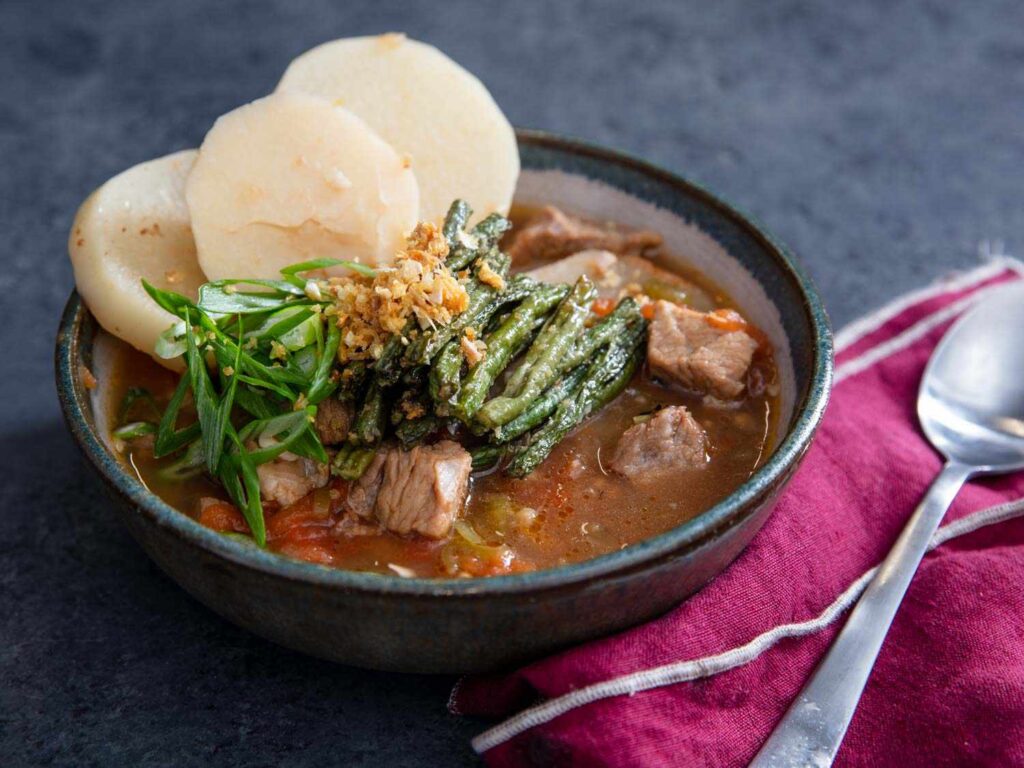
Sinigang na Baboy (Filipino Pork in Sour Tamarind Soup) Recipe
Why This Authentic Sinigang na Baboy Recipe Stands Out
For beginners, this version simplifies the process: no need for advanced techniques, just boil and layer flavors. It uses tamarind soup mix for easy souring, but you can opt for fresh tamarind for a more traditional touch. The result is a nutritious soup that’s naturally gluten-free and packed with veggies, making it a wholesome meal option in Philippine households.
Ingredients for Authentic Sinigang na Baboy (Serves 4-6)
Use these accessible ingredients, commonly found in Filipino markets:
- 1.5 kg pork ribs or belly, cut into chunks (bone-in for richer broth)
- 1 large onion, quartered
- 2-3 medium tomatoes, quartered
- 1 packet tamarind soup mix (sinigang mix, about 40g) or 1/2 cup fresh tamarind paste
- 1 medium radish (labanos), peeled and sliced
- 1 bunch string beans (sitaw), trimmed and cut into 2-inch pieces
- 2-3 eggplants (talong), sliced
- 5-6 okra pods, trimmed
- 1 bunch kangkong (water spinach) or bok choy, leaves separated
- 2-3 long green chilies (siling haba)
- 2 tablespoons fish sauce (patis), adjust to taste
- 8-10 cups water
- Optional: 3-4 taro roots (gabi), peeled and quartered for thickness
These create a balanced, veggie-heavy soup that’s true to Filipino traditions.
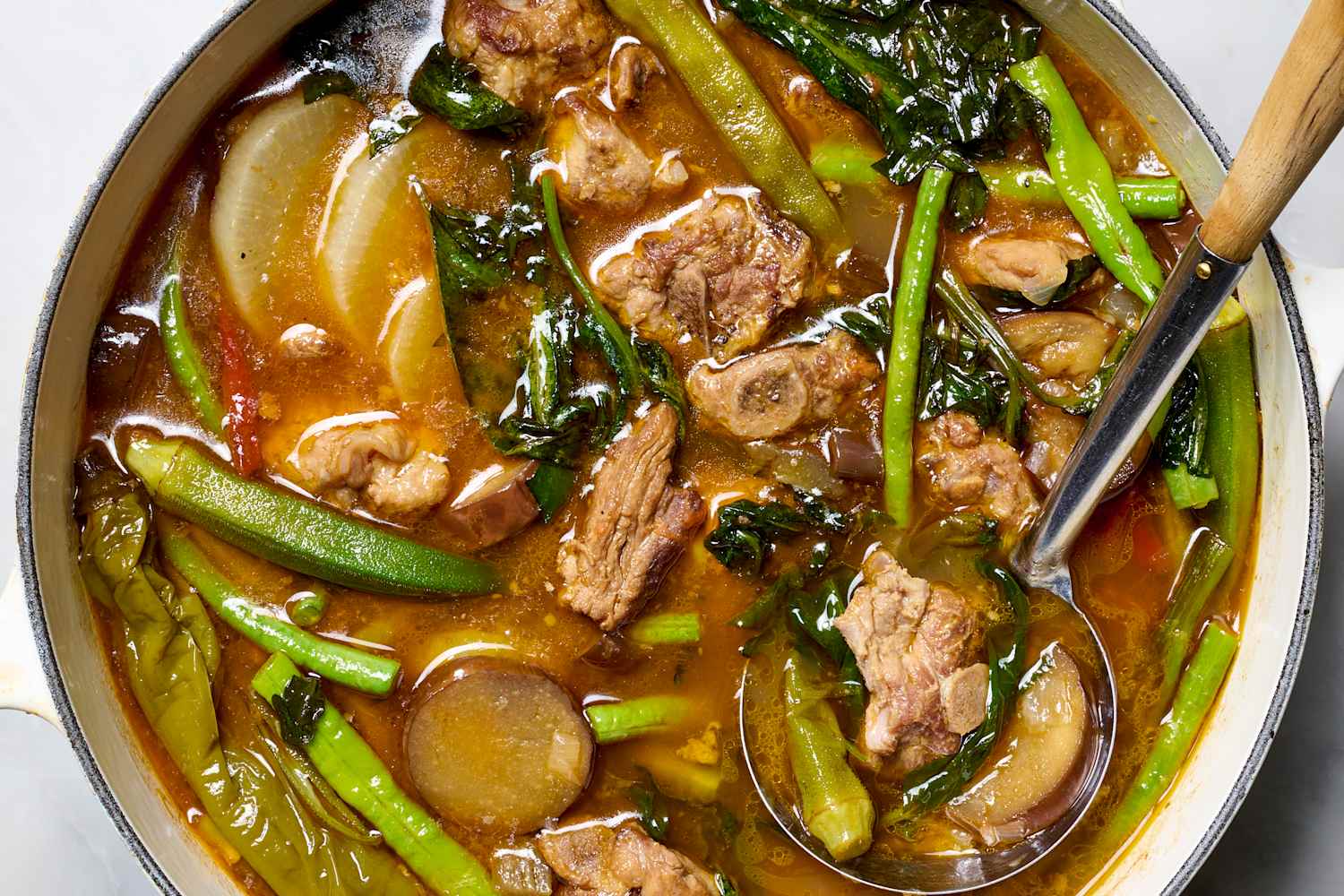
Sinigang na Baboy (Filipino Tamarind Soup with Pork and Vegetables)
Step-by-Step Instructions: How to Make Authentic Sinigang na Baboy
This beginner-friendly method ensures tender pork and crisp veggies:
- Boil the pork: In a large pot, add the pork pieces and water. Bring to a boil over high heat, then skim off any scum. Reduce to medium and simmer for 30-40 minutes until pork is tender.
- Add aromatics: Stir in the onion, tomatoes, and fish sauce. Simmer for 5 minutes to infuse flavors.
- Incorporate tamarind and hard veggies: Dissolve the tamarind mix in a bit of hot broth and add back to the pot. Add radish, taro (if using), and eggplants. Cook for 10 minutes.
- Add remaining veggies: Toss in string beans, okra, and chilies. Simmer for 5-7 minutes until veggies are crisp-tender. Finally, add kangkong leaves and turn off heat—let wilt for 1-2 minutes.
Total time: About 60 minutes. Taste and adjust sourness with more tamarind or saltiness with fish sauce.
For a visual walkthrough, watch this beginner-friendly YouTube tutorial on making authentic sinigang na baboy: https://www.youtube.com/watch?v=GCo4fg_SiR4
Tips for the Best Sinigang na Baboy in Authentic Filipino Style
- Sourness level: Start with half the tamarind mix and add more to taste—Filipinos love it tangy!
- Veggie timing: Add harder veggies first to avoid overcooking softer ones like okra.
- Storage: Refrigerate leftovers for up to 3 days; the flavors deepen overnight. Reheat gently to keep veggies crisp.
- Healthier option: Use leaner pork cuts or add more greens for a lighter version.
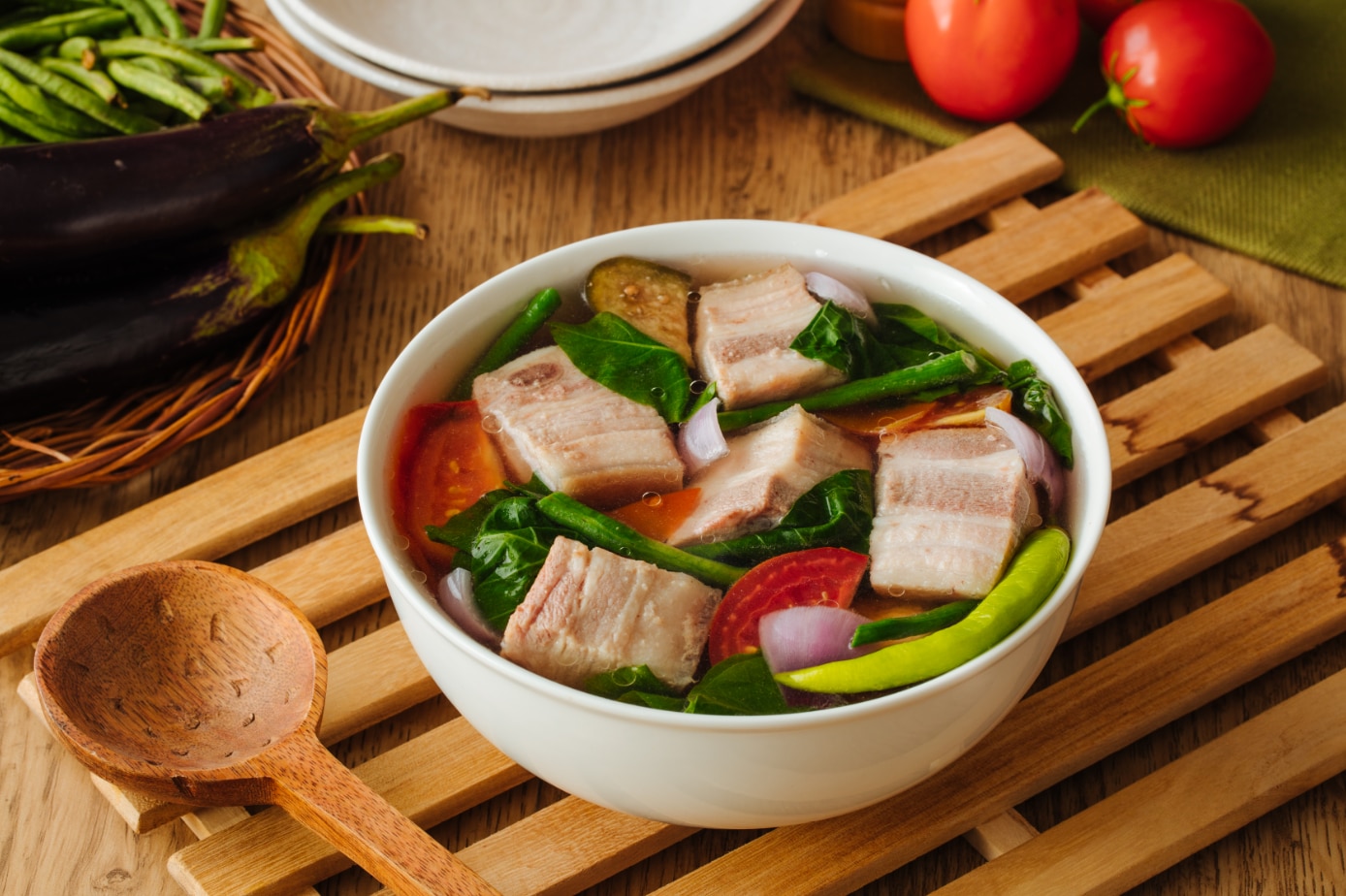
Sinigang na Baboy
Variations on Authentic Sinigang na Baboy
- With gabi: Add taro for a creamy, thicker broth, popular in some regions.
- Seafood twist: Swap pork for shrimp or fish for sinigang na hipon.
- Vegan option: Use tofu and vegetable broth, souring with calamansi or guava.
Nutritional Information (Per Serving)
Approximately: 300 calories, 25g protein, 15g fat, 20g carbs. Rich in vitamins from veggies, it’s a balanced, low-carb friendly dish when portioned right.
Frequently Asked Questions About Sinigang na Baboy
What makes sinigang authentic?
The sour broth from tamarind, combined with fresh veggies and pork, defines this Filipino staple.
Can I use fresh tamarind?
Yes, boil unripe tamarind pods, strain the pulp, and add for a fresher taste.
Is sinigang spicy?
It can be mildly spicy from chilies, but adjust or omit for a milder version.
This authentic sinigang na baboy recipe for beginners brings the warmth of Philippine home cooking to your table. Try it out and savor the tangy goodness!